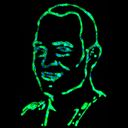
Expanded Karenia papiloniaceae with a zoom to his nice crystalline chromosomes 😍
It is very hard to image small cells🔍 To combat this,we are doing Expansion Microscopy (ExM), a method which enlargens cells and makes it possible to see even small structures with high resolution!
Here are ~4x expanded Rhodomonas cells from our latest ExM session😄
#ExM #protist #scicommUU26
The first paper from #theLifeOfRetaria is out!
doi.org/10.1002/bies...
This was a very fun and enriching process, as it has been the last 2 years of our Seminar Series 🤩
#protistsonsky
Did you know that Hexamita nelsoni occurs in blue mussels? Now you know 😂 see our paper here www.sciencedirect.com/science/arti... #protistsonsky
10/10
Perhaps aggregation is not an evolutionary dead end after all!
Perhaps it was one of the evolutionary experiments from which animal multicellularity emerged.
Link: www.nature.com/articles/s41...
@icreacommunity.bsky.social
#AnimalOrigins #Evolution #Multicellularity
If you want to read a cool story today, look no further:
A billion-year-old bacterial machinery replicates plastid DNA and supports kleptoplastidy #protistsonsky www.biorxiv.org/content/10.6...
@chrisgirardb.bsky.social Christine’s first manuscript is on BioRXiv! She investigated the CCDC40 protein in trypanosomes with superb expansion images and unexpected findings!
www.biorxiv.org/content/10.6...
Arcellinids are just like you and me
www.instagram.com/reel/DYulmB7...
www.instagram.com/tardibabe
Very excited to be sharing our new paper, just out in Nature Cell Biology!
The big question we investigate: How do migrating cells put their front 🔴 and back 🔵 in the right place?
"microtubule feeding tentacles"!
Video
Video
Nature - A unicellular relative links aggregative multicellularity to animal origins
Cellular structure self-organizes through an interplay between internal mechanisms and external cues. The single-celled suctorian P. collini builds a trap structure to capture large prey using microtubule feeding tentacles, creating feedback between cell morphology and prey availability.
We got our first common paper out #theLifeOfRetaria with @sandinmm.bsky.social , @raphaelmorard.bsky.social, @nicolecoots.bsky.social, @mattgr3co.bsky.social, Nicolaas Glock and Natalia Llopis-Monferrer - first product of our seminar series!
check it out! onlinelibrary.wiley.com/doi/abs/10.1...
Research on Foraminifera and Radiolaria has predominantly focused on their fossil remains. This synthesis identifies the “Big Five” disciplines of a unified Retaria research: diversity and evolution,...