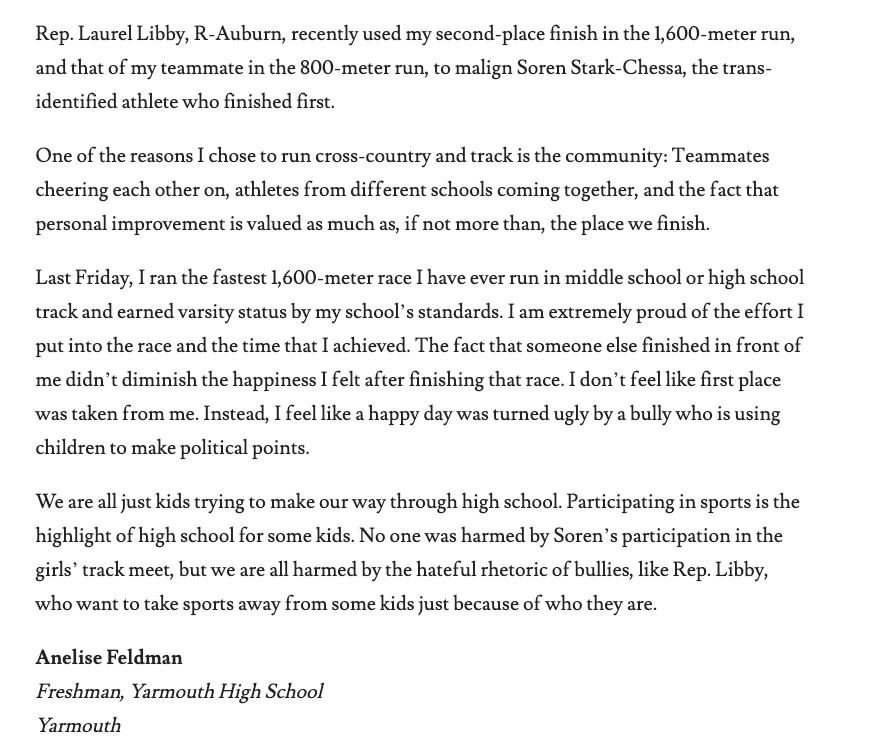
this is a letter to the editor from a high school track runner who came in second to a trans girl in a race. her state house rep in maine started talking about it. so she wrote this: www.pressherald.com/2025/05/14/r...
The paper contains a number of cool extensions that explore conditions under which people become more or less sensitive to harm and severity when making moral comparisons. Check it out (open access) here:
journals.sagepub.com/doi/10.1177/...
Subscription and open access journals from Sage, the world's leading independent academic publisher.
journals.sagepub.com
Sam is one of the most thoughtful scholars of dishonesty around. His latest on the topic - disentangling cheating from lying - is required reading!👇
The 5th HotFresh recommended paper is:
Kirgios, E. L., Silver, I., & Chang, E. H. (2025) Does communicating measurable diversity goals attract or repel historically marginalized job applicants? Evidence from the lab and field, J Experimental Psychology: General
psycnet.apa.org/fulltext/202...
Ike Silver
Do women feel some emotions more strongly than men do? Out today in Affective Science, I argue that claims like this make a notoriously subtle mistake. What is it? And what does it have to do with an astigmatic painter and thyroid medicine? A short thread...
(1/14)
We all get angry. And some of us get angrier than others. But are such differences systematic across groups? Affective scientists often make claims about group differences in emotional intensity by co...
Really proud of this new work out @psychscience.bsky.social. Led by the amazing but bluesky-less Amanda Geiser and with @deborahsmall.bsky.social.
We show that when comparing moral wrongs, people are (much) more willing to “scale up” than to “scale down” condemnation and punishment…
Ike Silver
sjdm-tweets
What makes people feel entitled to rewards?
Check out Corey’s paper for a provocative new take…
While people readily say that bad act A is worse and deserves more punishment than bad act B, they are reluctant to say that B is less bad and deserves less punishment than A. When asked which of two acts is less bad, many opt to say both are equally bad (even when one is quite transparently worse!)