Mitosis and chromosome biology researcher @rockefelleruniv.bsky.social, New York, NY. Former backstroker. Choir part: bass. Brined turkey & りゅうひ巻き係
funabikilab.com
www.rockefeller.edu/our-scientists/heads-of-laboratories/1169-hironori-funabiki/
Hironori Funabiki
Loading...
A great curiosity-driven research!
Hironori Funabiki
The peer-reviewed VOR for the MagIC-cryo-EM paper by @yarimura.bsky.social and @1001hak.bsky.social is finally published!
Congrats Yasu!
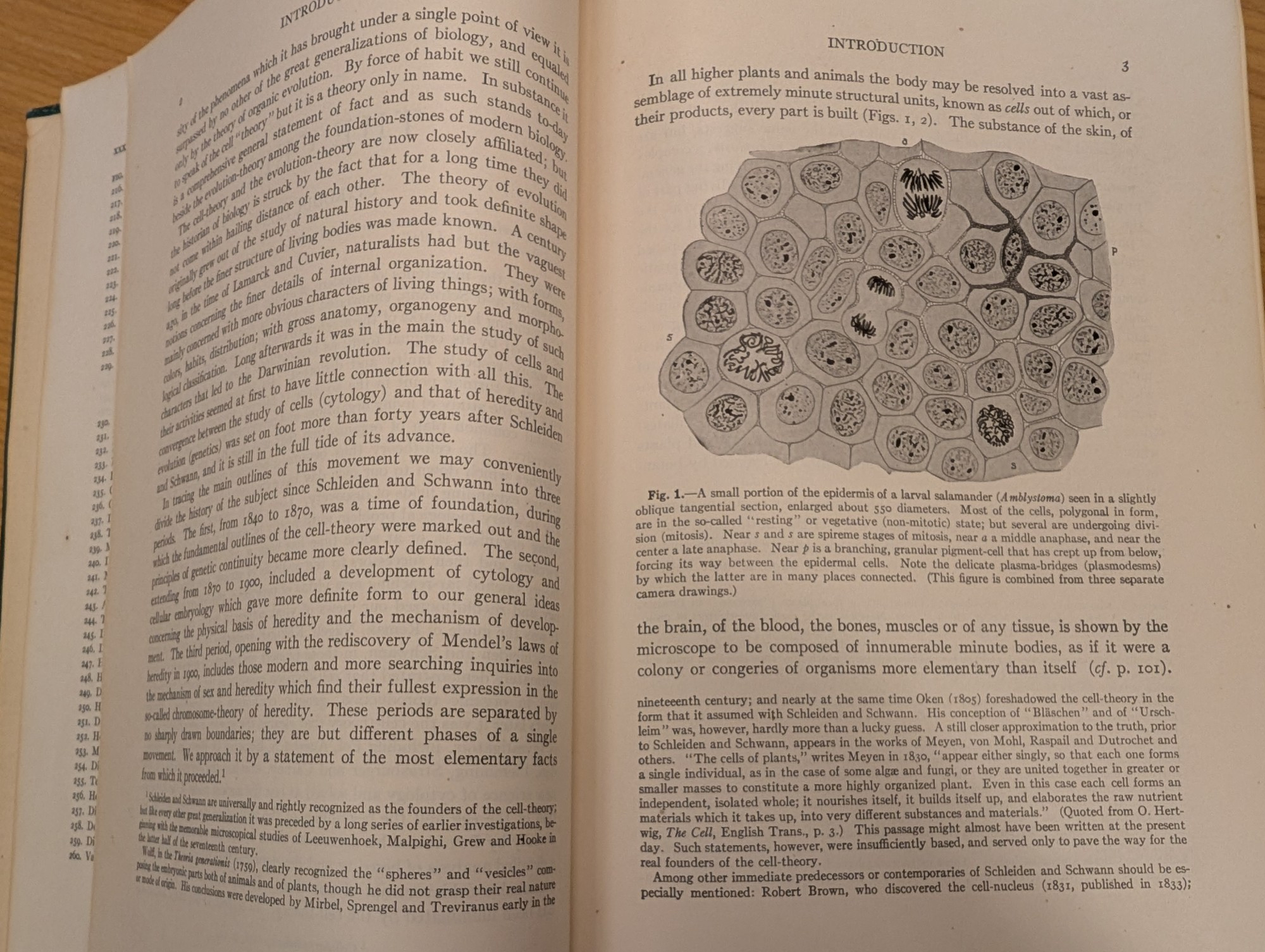
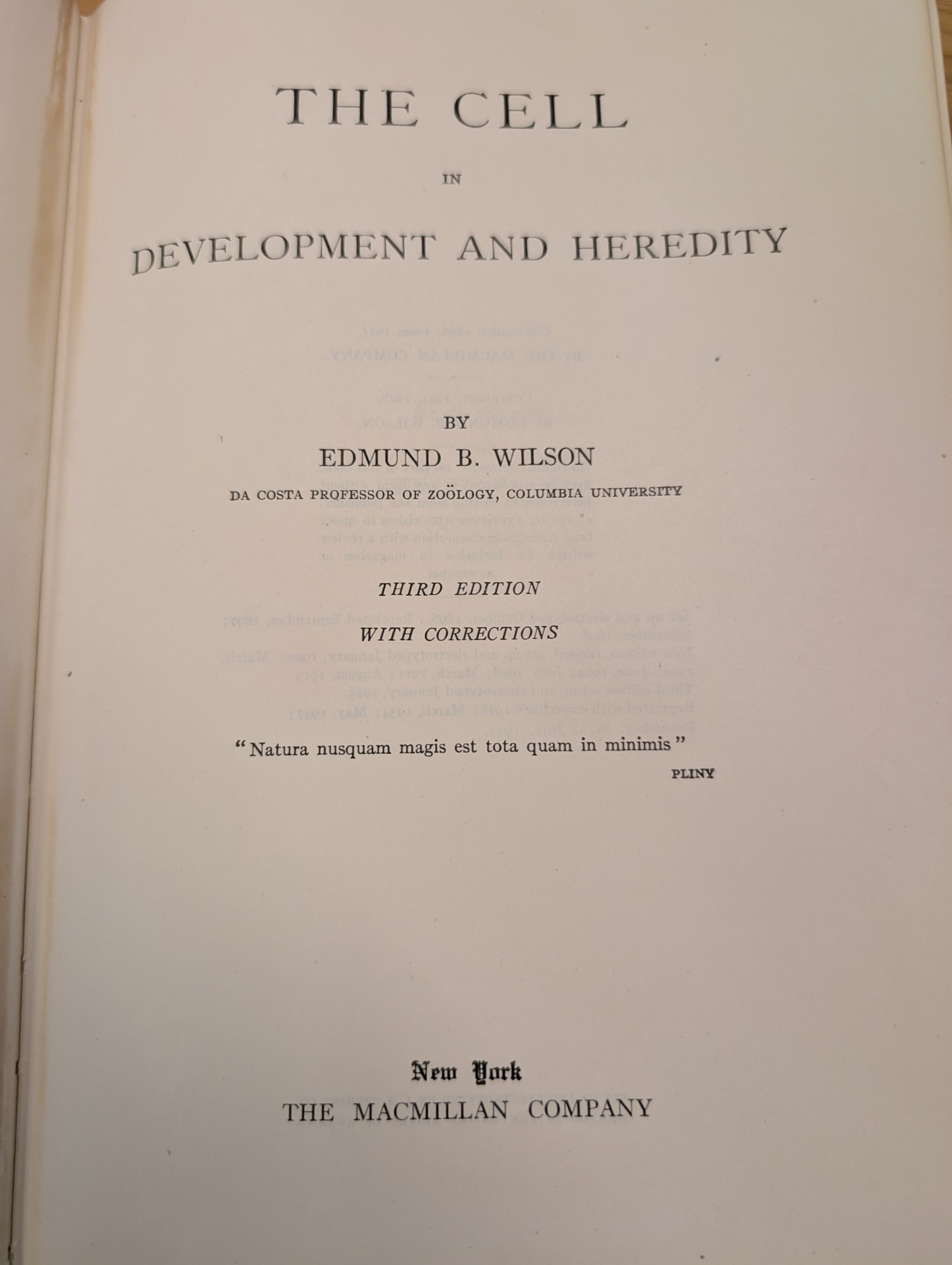
In preparation for the lecture tomorrow, I opened "The Cell in Development and Heredity" by E.B. Wilson (Columbia Univ), and realized that this 3rd edition was published in 100 years ago.
So many things happened since then, including the fact that I, a Japanese Prof in NY, own and read the book.
Are you a grad student pursuing the life sciences or biomedical research outside the U.S.? Applications now open for the Angelika Amon Young Scientist Award until June 13. Enter to win $1,000 USD & a chance to present your work & network w/ MIT faculty.
buff.ly/F7s94vW
Even "useless" objects can be appreciated - arts are indispensable for human society.
en.wikipedia.org/wiki/Hyperar...
Biologists know that redundant or non-essential parts often play important roles.
Still, human society must decide on priorities, and this requires justifications.
Please check out my essay on the amazing life of Japanese American artist Ruth Asawa and her retrospective exhibition at MOMA, released at RockEDU Science Outreach blog site.
rockedu.rockefeller.edu/blog/how-i-d...
A new method from @hirofunabiki.bsky.social dramatically improved cryo-EM’s imaging capabilities, enabling visualization of molecules that are very rare, very small, or hard to produce naturally—including some viruses. #RockefellerScience #YearInReview
🔗: https://bit.ly/4awR4gv
Excited to share our structural insights into how microtubules differentially guide phosphorylation of kinetochore-microtubule regulators, Ndc80 and MCAK, for chromosome segregation. Heroic efforts by Yiming Niu with a fun collaboration with Jennifer DeLuca lab!
www.science.org/doi/10.1126/...
"The centennial of E.B. Wilson's The Cell in Development and Heredity" by Maienschein, Chalfie, and Pederson, including reflections by J. R. McIntosh, Matthew Messelson, et al.
www.molbiolcell.org/doi/10.1091/...
Cryo-EM reveals how kinetochore-microtubule attachment is regulated by Aurora B substrate accessibility on microtubules.
www.science.org
Hironori Funabiki
MIT Koch Institute
The Rockefeller University
Microtubules have been viewed as passive structural supports, but a study from @hirofunabiki.bsky.social in @science.org Advances redefines microtubules as active regulators, helping to prevent abnormalities in the number of chromosomes, a hallmark of cancer.
🔗: https://bit.ly/4v8miCC
The Rockefeller University
Researchers in the #FunabikiLab have devised a way to visualize molecules that are very rare, very small, or hard to produce naturally—including some viruses.
@elife.bsky.social #RockefellerScience
The Rockefeller University
by Hironori Funabiki, Professor at the Rockefeller University “I’m not so interested in the expression of something. I’m more interested in what the material can do. So that’s why I keep exploring.” —...
We review and salute the third edition of E.B. Wilson's “The Cell in Development and Heredity” published a century ago, noting its unique features and placing them in context. Brief commentaries from ...
A technique that enables single-particle cryo-EM analysis of targets on a magnetic bead and a particle curation method that helps structural classification of small particles has been developed.
elifesciences.org
I am happy to share a preprint on the marine plankton project I started one year ago (thanks to Julius and Drahomira's help)
www.biorxiv.org/content/10.1...
I may not be the first or last person to tell you about Chesterton's Fence, but I have a feeling you're already thinking about it under some other name
Researchers have devised a way to visualize molecules that are very rare, very small, or hard to produce naturally, including viruses.
Diplonemids are highly diverse and abundant marine plankton with significant ecological importance. However, little is known about their biology, even in the model diplonemid Paradiplonema papillatum ...
So I started working on a marine plankton called Diplonema papillatum, a non-traditional model of diplonemids (which turned out to be very abundant and diverse in the ocean). Everything is difficult! But it is so much fun to try to explore unknown unknowns