Finally out! Trabecular structure in tamarins changes depending on their leaping distance! A collaboration with U. Nguyen, @fabioalfieri2.bsky.social, A. Licht and @johnnyakatura.bsky.social, using my #R package "indianabones". (1/2)
#primates #BioAnth #bones #science 🧪🐒🦴🏺
doi.org/10.1002/ajpa...
New paper out! 🦴🐒 In the trabecular bone of tamarin limbs, we found that beyond non-locomotor factors, leaping distance leaves a signal! Thanks to @aveneziano.bsky.social, and colleagues from the lab led by @johnnyakatura.bsky.social
Open Access on American Journal of Biological Anthropology
Finally out. More of our work on tamarins 🤩. Whole‐Epiphysis Trabecular Bone in Tamarin Limbs Suggests Effects of Leaping Distance Alongside Non‐Biomechanical Factors - Nguyen et al. - 2026 - American Journal of Biological Anthropology - onlinelibrary.wiley.com/doi/10.1002/...
onlinelibrary.wiley.com
Objectives
Beyond non-biomechanical factors, the trabecular architecture of long bone epiphyses variably underlies functional adaptations to locomotor behavior. A recent study, characterizing tamari.....
Very proud of the first paper of the PhD project of Adrian Scheidt.
Fabio Alfieri
John Nyakatura
Dr Alessio Veneziano
Finally out. More of our work on tamarins 🤩. Whole‐Epiphysis Trabecular Bone in Tamarin Limbs Suggests Effects of Leaping Distance Alongside Non‐Biomechanical Factors - Nguyen et al. - 2026 - American Journal of Biological Anthropology - onlinelibrary.wiley.com/doi/10.1002/...
John Nyakatura
I don't think that the reviewers asking me for higher animal numbers really understand how many 40 goats are. Do you know the CHAOS that comes with dealing with 40 GOATS in an experimental setting!
Mice people cannot comprehend.
3 goats alone ate a tarp, a clock, and 2 expensive accelerometers!
2 PhD Opportunities! 🤩
We are recruiting two highly motivated PhD students to join an ambitious project advancing Robotic Paleontology—a rapidly emerging field that fuses paleontology, biomechanics, simulation, and robotics.
nyakaturalab.com/news/
Please share!!
Cool new insights into some weird fossil mammals from Madagascar 😎
locomotor behaviour of subfossil Malagasy sloth-lemurs (Strepsirrhini: Indriidae) and koala-lemurs (Strepsirrhini: Megaladapidae): new insights from limb trabecular bone url: academic.oup.com/zoolinnean/a...
John Nyakatura
Objectives
Beyond non-biomechanical factors, the trabecular architecture of long bone epiphyses variably underlies functional adaptations to locomotor behavior. A recent study, characterizing tamari.....
I’m very happy to share that our work on bone inner structure of Madagascar’s subfossil sloth- and koala-lemurs is finally out 🦴🐒 on @zoojlinnsoc.bsky.social
A big thank you to co-authors @julsam.bsky.social Carla Argilés Esturgó and Damiano Marchi!
academic.oup.com/zoolinnean/a...
1/6
@johnnyakatura.bsky.social et al., investigate the scaling of internal joint distance (IJD), a surrogate measure for cartilage thickness, across small- to medium-sized mammals.
Elbow position had no significant effect on IJD and used these data to model the range of motion (ROM) at the elbow joint
See what’s been happening in the Nyakatura Lab. News: discover our latest publications, recent events, and research highlights.
Abstract. The locomotion of Malagasy Quaternary subfossil lemurs, including palaeopropithecines (‘sloth-lemurs’) and megaladapids (‘koala-lemurs’), has bee
Abstract. The locomotion of Malagasy Quaternary subfossil lemurs, including palaeopropithecines (‘sloth-lemurs’) and megaladapids (‘koala-lemurs’), has bee
Our work on mammalian hallucal grasping, led by Irene Montañez-Rivera during her time in the @johnnyakatura.bsky.social group, is out now in iScience. A true team effort; thanks to the whole crew for inviting me to contribute a small piece! www.cell.com/iscience/ful...
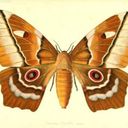
🛡 Natural history of the animal kingdom for the use of young people
Brighton: E. & J.B. Young and Co., 1889.
[Source]