Alcohol Intake and Health Study: No Protective Effect at Low Levels, With Mortality Increasing to 1 in 25 at 14 Drinks Per Week (new #openaccess in @jsadjournal.bsky.social)
@camhnews.bsky.social @uviccisur.bsky.social @brownpublichealth.bsky.social @hsph.harvard.edu
www.jsad.com/doi/full/10....
Measles? Norovirus? Ebola? West Nile virus? The World Cup has public health officials on high alert.⚽
Objective: The purpose of this study was to estimate the lifetime risk of alcohol-attributable mortality and morbidity in the United States based on a person’s average lifetime weekly alcohol consumption to assess the impact of per-occasion alcohol consumption on health. Method: Lifetime risks were estimated using a cause-specific modeling approach that combined exposure data from national health surveys, relative risks, population data from the U.S. Census Bureau, mortality data from the Centers for Disease Control and Prevention, and morbidity data from the Institute for Health Metrics and Evaluation. A narrative review assessed the health impact of per-occasion alcohol consumption on health. Results: At low levels of consumption, no protective net effect of alcohol consumption on health was observed. Elevated mortality and morbidity risks were associated with alcohol consumption starting at relatively low levels. Males consuming >6.5 (95% CI [<1, 13.5]) and females consuming >7.0 (95% CI [<1, 11.5]) drinks per week had life-time alcohol-attributable mortality risks >1:1,000. At >8.5 (95% CI [2.5, 13]) drinks per week for both males and females, these risks increased to >1:100. At 14 drinks per week for males (the upper limit of the former Dietary Guidelines for males), the risk of an alcohol-caused death was 1:25 (4%). Drinking patterns also impacted risk. Above 1 drink per occasion, higher consumption was associated with progressively increased risks of breast cancer, cardiovascular disease, and injury. Conclusions: Alcohol consumption, including at what may be perceived as “moderate” levels, is associated with increased mortality and morbidity risks. These results support tightening alcohol use guidance in the United States, for both males and females, to no more than 1 drink per day. Public health significance statement: The Alcohol Intake and Health Study shows that for Americans, even what is socially considered “moderate drinking” increases the risk of dying or developing health problems, helping people better understand the net health impact of alcohol. Furthermore, by identifying the levels of alcohol use that raise the risk of cancer, cardiovascular disease, and injury, these findings can guide individuals, families, and communities in making safer choices about drinking patterns. The results also support changing the U.S. Dietary Guidelines on alcohol to recommend that current adult drinkers consume 1 drink or less in a day.
Speaking before the Subcommittee on Health of the US House Committee on Energy & Commerce yesterday, Professor @cwhaley.bsky.social called on Congress to improve healthcare #transparency. “Transparency is foundational,” Whaley said.https://www.brown.edu/news/2026-06-10/whaley-congressional-testimony
CONTINUUM🍹 We spoke to Professor @chriskahlerphd.bsky.social and other @browncaas.bsky.social researchers about America's changing drinking habits. It's a shift they say reflects the growing evidence of alcohol's serious health risks, even for moderate drinkers.
Journal of Studies on Alcohol and Drugs
WATCH @pandemiccenter.bsky.social director, Professor @jennifernuzzo.bsky.social joined @@wpri12.bsky.socialto discuss the Ebola outbreak, hantavirus, and what the World Cup could mean for disease spread.
"People on the street in Kenya are angry because for many of them, this looks like colonial decision making all over again," Professor @craigspencer.bsky.social says. "That we can come into a country... do whatever the hell we want has led to an incredible amount of anti-American backlash."
Soccer fans are thrilled about the World Cup.⚽
With >6.5M expected to attend matches in 16 cities between 48 teams from around the world, public health fans are nervous.
We've got Professor Will Goedel to discuss.⤵️
LISTEN🎧 https://humans-in-public-health.captivate.fm/episode/mapping-the-world-cup
"It's completely stunning that we would not allow Americans to return to the U.S.," Professor @jennifernuzzo.bsky.social tells @npr.org. "We have specialized, taxpayer-built units that exist solely for this purpose: to provide life-saving care to people who may be exposed to deadly diseases."
At #GHS2026, we joined RAND & @cepi.net for a #The100DaysMission simulation, and exercises like this bridge gaps and spark strategy.
Thanks to Claire Standley, @drsethberkley.bsky.social, @jennifernuzzo.bsky.social, @bethcameron-dc.bsky.social, Andrew Hebbeler & others!
Brown University School of Public Health
Brown University School of Public Health
Brown University School of Public Health
The administration imposed mandatory quarantine orders on two passengers from the cruise ship hit by hantavirus and is blocking Americans who catch Ebola from returning home for treatment.
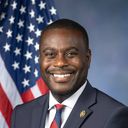
Welcomed @brownpublichealth.bsky.social leaders to Washington to discuss supporting our neighbors battling addiction.
Shared how I’m working across the aisle to increase the availability of opioid overdose reversal kits with my HOPE Act, support those in recovery, and save lives.
Brown University School of Public Health
Brown University School of Public Health
Brown University School of Public Health
Brown University School of Public Health
Pandemic Center at Brown University’s School of Public Health
Congressman Gabe Amo
Opinions are divided about the new facility in Kenya. The U.S. defends it. Kenyans are protesting it. Doctors who were on the ground in the 2014 Ebola outbreak voice criticism as well.
Health officials will be on high alert for germs as millions of soccer fans gather for World Cup matches. A heat wave may be the most obvious health threat.