"Due to these misperceptions, even willing politicians who want to do more felt their hands were tied.”
‘A silent majority’: MPs underestimate support for green policies, study reveals
Open access: Malte Dewies, @leede-wit.bsky.social and Lucia Reisch use a pre-registered survey study to examine how assumptions about cooperation, behavioural malleability, and self-control influence policy preferences among public officials in the Netherlands www.tandfonline.com/doi/full/10....
I was delighted to jointly win the Anne Treisman award 2025! For my paper on Bayesian polarisation, in Cognition: doi.org/10.1016/j.co... Thanks so much to @sjblakemore.bsky.social and the rest of the committee, and my co-authors @leede-wit.bsky.social and @jenskoedmadsen.bsky.social
The Guardian
Tim Bale
First time on Blue Sky! Super happy this article is now out in an issue of Political Psychology! And honoured by the promo tweet with custom-made graphic! @leede-wit.bsky.social
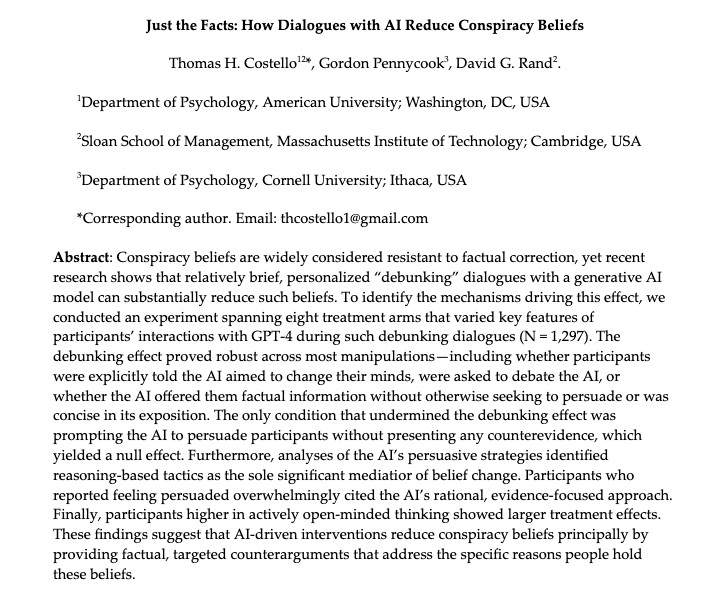
Last year, we published a paper showing that AI models can "debunk" conspiracy theories via personalized conversations. That paper raised a major question: WHY are the human<>AI convos so effective? In a new working paper, we have some answers.
TLDR: facts
osf.io/preprints/ps...
In a new paper in Cognition w. @davidyoung-psych.bsky.social and @leede-wit.bsky.social, we explore perceived dependencies as a possible cause for issue polarisation.
We show that this is possible experimentally where high dependency depresses updating.
www.sciencedirect.com/science/arti...
Academics have encountered issues in trying to establish whether polarisation is rising and why, primarily because it is hard to define polarisation and find ways to measure it. This #RSOS papers presents a new way of measuring polarisation using a machine learning algorithm: doi.org/10.1098/rsos...
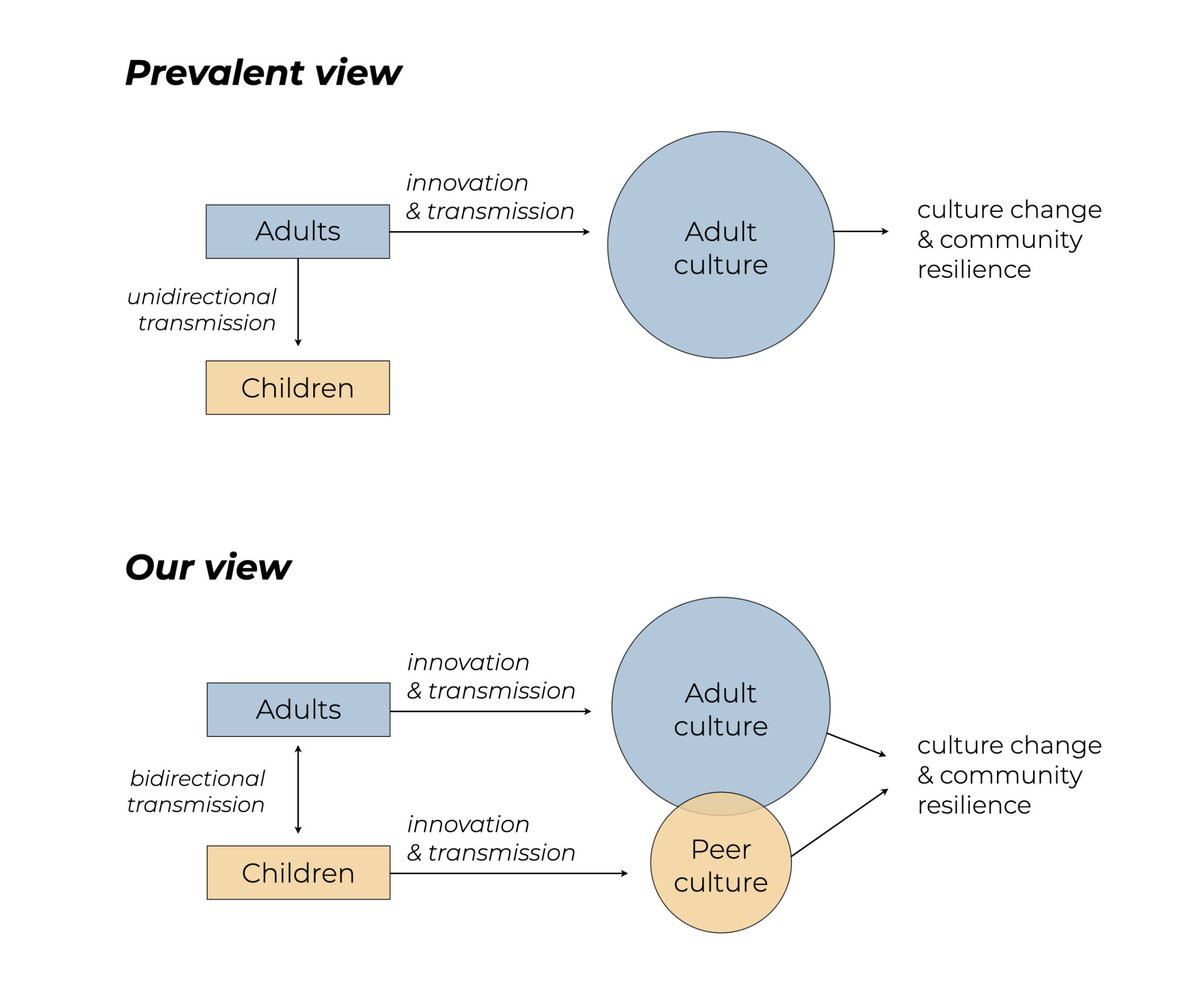
Excited to share that our BBS target article — "Children as agents of cultural adaptation" — is online & open for commentary! In it, @sheinalew.bsky.social & I argue that children's peer cultures might play an important & understudied role in cultural adaptation.
www.cambridge.org/core/journal...
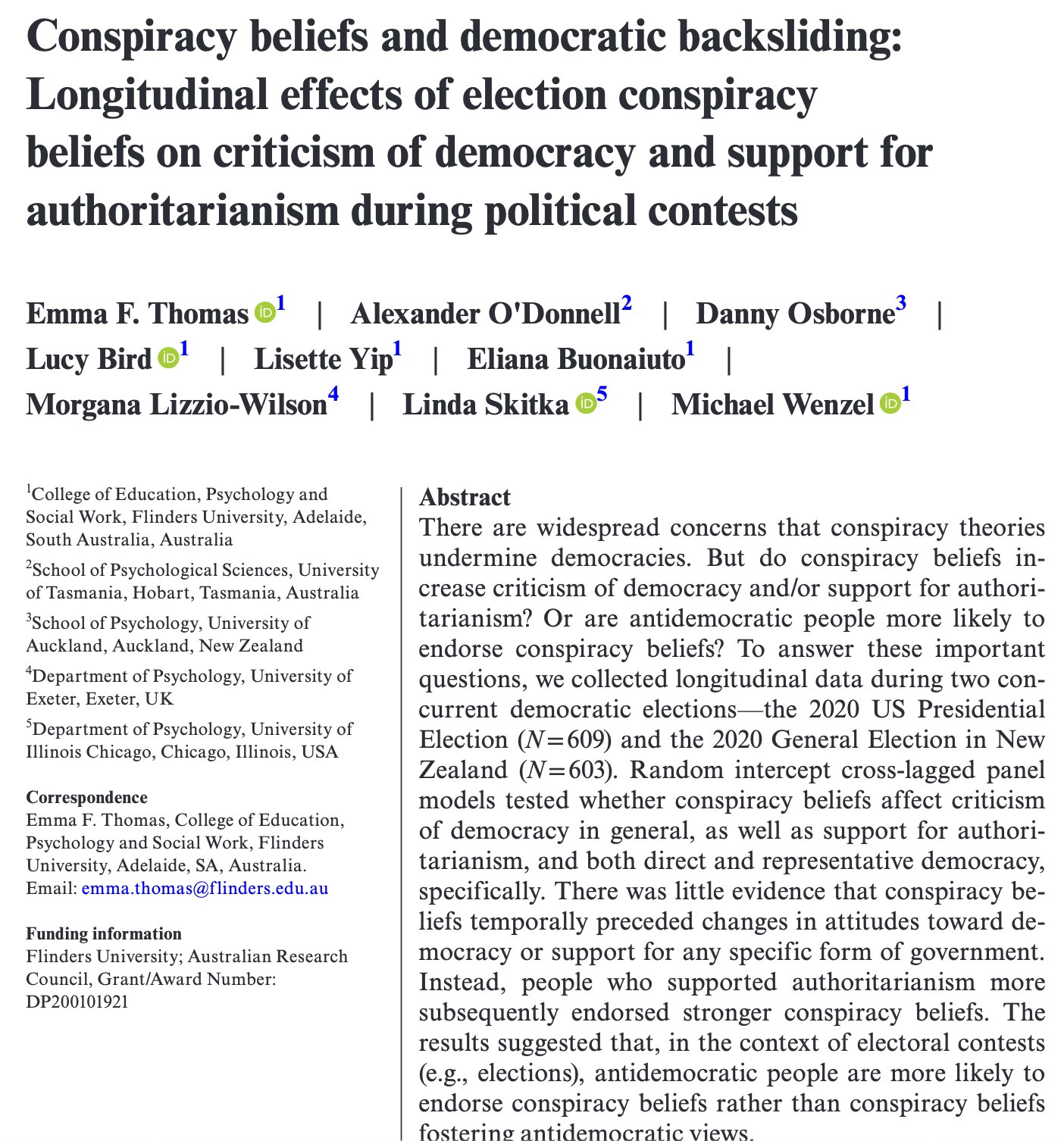
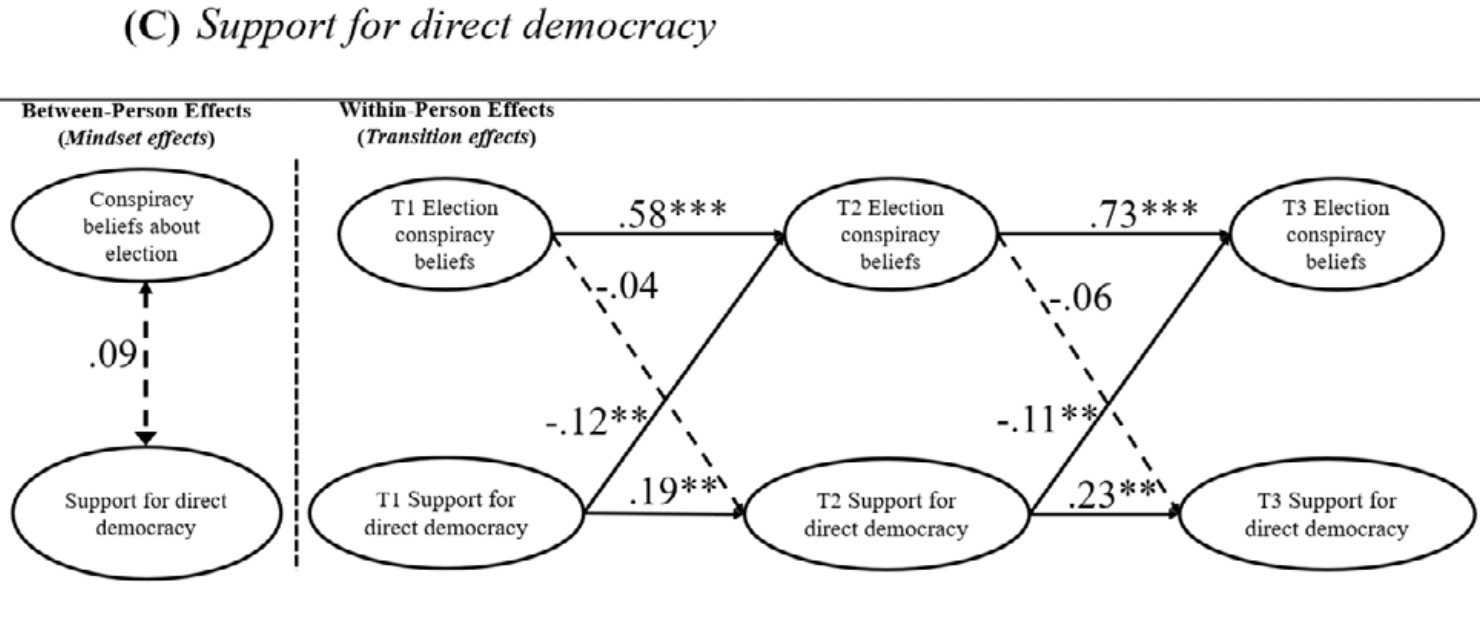
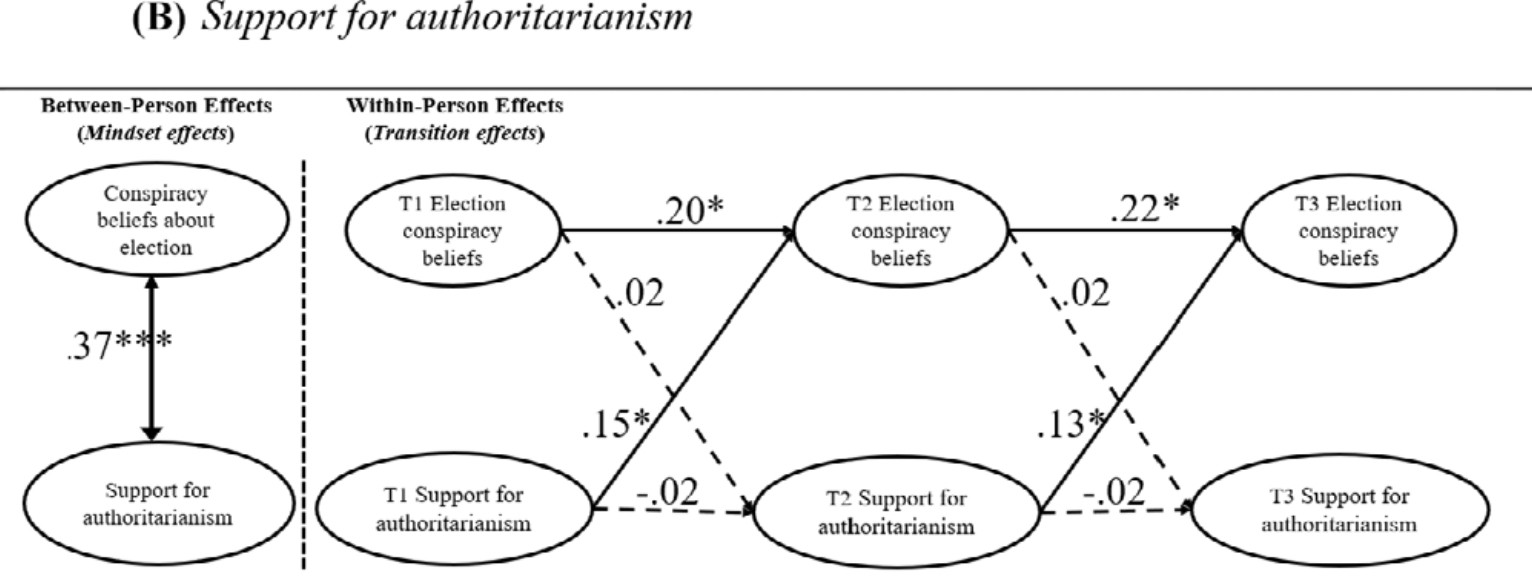
Over the 2020 US and NZ elections, antidemocratic attitudes preceded conspiracy beliefs, rather than conspiracy beliefs fostering antidemocratic attitudes
by @lindaskitka.bsky.social & many others in @ispp-pops.bsky.social #socpsych #polisky #polpsych
onlinelibrary.wiley.com/doi/full/10....
Exclusive: From solar subsidies to meat taxes, minority rightwing voices appear to drown out the consensus
Exclusive: From solar subsidies to meat taxes, minority rightwing voices appear to drown out the consensus
“There may have been a silent majority in favour of windfarms and higher petrol taxes, but if there was, these people were mighty quiet. Essentially, all I ever heard from was people objecting to them.” That was the view of a former UK MP who took part in new research that reveals how significantly British and Belgian politicians underestimate the public’s support for climate action.
From solar power and energy efficiency to meat taxes and frequent flyer levies, the politicians consistently failed to appreciate people’s appetite for policies that tackle global heating. The misapprehension has real world consequences: those politicians were less willing to vote for or speak up for those policies, according to the study. Continue reading...
A large literature debates whether belief polarization, in both experiments and real-world political opinion data, is the result of biased forms of re…
www.sciencedirect.com
New research by David Young and Lee de-Wit gives us a deeper look at polarization within political parties. Their findings suggest factional divides within a party can be as strong, and even stronger, than those between parties. Read more: https://doi.org/10.1111/pops.12973
🌟 Congratulations to Dr Chloe Austerberry and Dr @davidyoung-psych.bsky.social, who were jointly awarded The Anne Treisman Annual Best Paper Prize by a postdoctoral researcher in the Cambridge Department of Psychology.