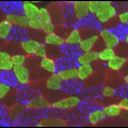
In our study with comprehensive assessment of REDs from 137 athletes, we found athletes in endurance, speed, and power sports and less so in team/interval sports to have high risk for REDs.
www.sciencedirect.com/science/arti...
@ritutm.bsky.social
Review: The Endothelium as a Central Mediator of Exercise-Induced Metabolism and Communication. "Cells lining the capillary endothelium, endothelial cells, play central roles in local and systemic metabolisms by sensing and responding to exercise-induced stresses."
journals.lww.com/acsm-essr/fu...
This study provides the first evidence in humans that resistance training (RT) modifies cortico-reticular and reticulospinal tract excitability. Differences were observed with metronome-paced and self-paced RT. physoc.onlinelibrary.wiley.com/doi/10.1113/...
We wrote about the potential reasons why some people respond less to training and about new highlights in resistance training research presented in November 2026. But we also criticize the concept of individual variation in exercise adaptations and suggest new study designs.
Great team involved in this review based on a conference we organized at the University of Jyväskylä, Finland. @uniofjyvaskyla.bsky.social
tinyurl.com/27zupuhc
@abigailmackey1.bsky.social @mackinprof.bsky.social
@wimderave.bsky.social and others not yet in Bluesky.
Increase in fiber cross-sectional area was mediated through a rapamycin-sensitive signaling pathway, whereas longitudinal growth, marked by the in-series addition of sarcomeres, was mediated through a rapamycin-insensitive signaling pathway.
www.science.org/doi/10.1126/...
Our new study is now published in Advanced Science
We show that skeletal muscle retains a molecular memory of disuse
Young muscle shows transcriptional resilience
Aged muscle shows exaggerated vulnerability
advanced.onlinelibrary.wiley.com/doi/10.1002/...
The Inter-Individual Variation in Resistance Training Response Conference was hosted at the University of Jyväskylä, Finland November 19-21, 2025. This paper summarizes key themes that emerged across lectures and discussions. First, resistance training induces multi-dimensional adaptations at the tissue, muscle fiber, and ultrastructural levels, including radial muscle fiber hypertrophy through increased myofibril number, longitudinal growth through sarcomere addition throughout the length (not ends) of muscle fibers, and metabolic adaptations that emulate other models of rapid cell growth. Second, training program variables including weekly sets, volume-load, rest interval duration, and training proximity to failure meaningfully influence hypertrophic outcomes in the general population, whereas exercise selection can be flexible. Third, age as well as molecular signatures prior to and in response to training influence inter-individual response heterogeneity. Finally, while inter-individual variability in observed hypertrophic responses is considerable, delineating true inter-individual variability from random variation remains challenging. Hence, study design considerations that can be thoughtfully applied to enhance rigor include repeat validation trials, unilateral within-subject designs, minimum clinically important difference thresholds, and multivariate composite responder classifications. This paper aims to summarize conference highlights while also providing meaningful implications for both researchers and practitioners and advancing current thinking on heterogeneity in the resistance training response.
Humans with function-disrupting variants in the myostatin gene (MSTN) have increased skeletal muscle mass and strength, and less adiposity
www.nature.com/articles/s41...
An interesting read:
Science is always unfinished: rethinking the demand for complete stories science
www.cell.com/trends/bioch...
💪new 1st author publication @grithhojfeldt.bsky.social and Joris Michaud from fantastic #CollaborativeScience team effort bewteen @ismcopenhagen.bsky.social and Nestle @feigelab.bsky.social on the role of NAM/PN in human muscle regeneration🙌🏃🙌
advanced.onlinelibrary.wiley.com/doi/10.1002/...
Juha Hulmi
Juha Hulmi
Juha Hulmi
Juha Hulmi
Juha Hulmi
Juha Hulmi
Professor Adam P. Sharples
In a randomized clinical trial, we test the potential of combined nicotinamide (NAM) and pyridoxine (PN) to improve muscle recovery through muscle stem cell (MuSC) activity. Daily oral NAM and PN sup....
Abstract figure legend Three weeks of unilateral resistance training (RT) performed under metronome-paced (MP-RT) or self-paced (SP-RT) conditions increased strength (maximum voluntary force (MVF) an....
This multi-cohort study reports genetic variants in myostatin associated with increased muscle mass, strength, and reduced adiposity. These findings support long-term myostatin blockade for muscle pre...
The ‘complete story’ has become the standard in top journals. Narrative structure
helps communicate science, but requiring mechanistic completeness for publication
can exclude important discoveries, d...