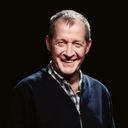
Professor of Inorganic Chemistry University of Strathclyde Glasgow Scotland
Robert Mulvey
Meet #sodium’s new #partnership with #silicon to promote regioselective #arene (multi)silylations @angewandtechemie.bsky.social An exciting synthetic and #mechanistic study byDavid Sanchez-Roa and Sophia Belrhomari @unibe.ch with Max Garcia Melchor and his team #openacess
doi.org/10.1002/anie...
Really enjoyed the @rsc.org Main Group Interest Group Annual Meeting @edinburgh-uni.bsky.social engrossing series of lectures on diverse topics. Congrats to organisers. Pleased to get a photo with the @evaheviagroup.bsky.social conference stars. Well done also to Tom, Anna, and Paul of Mulvey group
Vielen Dank Connie, Alex and Jeroen for making my visit to @unibonn.bsky.social truly memorable @bismutolab.bsky.social @cluchem.bsky.social #JeroenDickschat
Thrilled to co-author this perspective article with Eva and David. Think we are only at the tip of the iceberg on what is possible with these heavier alkali metals.
Well defined Cs organophosphides rocketing into prominence in alkene isomerisation catalysis with Astronauts Felix and Tom!
Eva Hevia
Tree of the Day. Hopefully soon to be European Tree of the Year. Check out Tree of the Year website to vote for Glasgow’s Argyle St ash
Continuing our campaign to study all the alkali metals in organometallic chemistry. Why don't you try this in your own studies? Our friends in Bern @evaheviagroup.bsky.social are!
Comparisons and Contrasts in a Complete Set of Alkali Metal Cumyl Structures | Inorg Chem pubs.acs.org/doi/10.1021/...
Fifty years of Chemistry - coming up at Burlington House on 10 March celebrating 50 years of the RSC Historical Group. Speakers include @rsc.org Past Presidents Gill Reid and Lesley Yellowlees and textbook legends Peter Atkins and Jonathan Clayden.
#chemsky #chemchat
www.rsc.org/events/detai...
Robert Mulvey
Eva Hevia
Congrats Paul! And thanks to SCGC for supporting our science. Looking forward to all the cool stuff we’ll be able to do in the lab!
Robert Mulvey
Robert Mulvey
We're Hiring! If you are interested in a PDRA post with the Mehta group, please apply! @ox.ac.uk @oxfordchemistry.bsky.social
my.corehr.com/pls/uoxrecru...
Alkali-metal benzyl complexes derived from toluene are known to vary their metal–ligand coordination mode as a function of the alkali-metal, with the metal transitioning from a typical σ bond to the anionic CH2 for lithium toward an interaction with the delocalized pi system of the aromatic ring as the metal gets larger and softer. Here, by switching to cumene, we report the charge-localizing effect of replacing the hydrogen atoms at the formally carbanionic carbon CH2 with electron-donating methyl groups in C(Me)2. NMR spectroscopic studies reveal competitive ring-metalation occurs, at the meta and para positions, alongside α-metalation on using an alkyl lithium base, with the meta- and α-isomers crystallographically characterized as a solvated dimer and monomer, respectively. Using Lochmann-Schlosser type base pairs to access the heavier alkali-metal complexes unveils only α-metalation. The presence of the methyl groups limits the variation in metal–ligand bonding, their electron-donating properties forcing the delocalization of the negative charge into the ring resulting in M-Ph interactions and sp2 hybridization at the formally deprotonated α-carbon regardless of the metal used. Considerable variation in aggregation state is observed with monomeric (Na), polymeric (K, Cs) and tetrameric (Rb) motifs identified in the solid-state.
While traditionally used as stoichiometric reagents, #HeavierAlkaliMetalAmides have emerged as versatile #catalysts find out more in this #perspective with #DavidSancehzRoa @pubs.acs.org in collaboration with @remglasgow.bsky.social @unistrathclyde.bsky.social
pubs.acs.org/doi/10.1021/...
Fiona McMillan
MehtaLab
MehtaLab
The Royal Society of Chemistry, Burlington House, Piccadilly, London, W1J 0BA, United Kingdom
Ceasium Strikes again! 🚀🚀
Now published in @angewandtechemie.bsky.social with @remglasgow.bsky.social and Thomas Horsley Downie!
onlinelibrary.wiley.com/doi/10.1002/...
Felix Krämer
Congratulations to Meera Mehta and Paul McGonigal, awarded SCGC-FIRST funding for high-impact sustainability research:
OxfordChemistry
Here, we report a breakthrough study in catalytic alkene isomerisation using crown ether-supported alkali metal phosphides in which the activity increases sequentially and significantly as Group One ...