Assistant Professor at Northwell
Previously McGill, Cornell, Yale
Brain-Based Predictive Modeling Lab: bpmlab.org
Interested in sex, gender, brain, behavior, mental health, development, and machine learning
Views are mine
🧠🇨🇦🇳🇵
Elvisha Dhamala
Loading...
BREAKING:
New proposed OMB regulation, applying to all federal grants, requiring grant reviews by senior political appointees and re-emphasizes that "peer review remains advisory and does not replace agency discretion".
#standupforscience
public-inspection.federalregister.gov/2026-10817.pdf
We are currently recruiting a data analyst and a postdoctoral fellow to lead projects related to perinatal neuroimaging and reproductive psychiatry. Apply at the links below!
We present the LARGEST normative model of the brain’s white matter microstructure: 54,583 subjects, 4-91 yrs, 19 datasets. We derived lifespan centile curves for DTI FA, MD, RD, AD, detecting anomalies for dementia, and Mild Cognitive Impairment: doi.org/10.1038/s414... ⤵️
✨ The State of the Brain 2025 features leading voices from last year's Annual Meeting, highlighting major advances in brain imaging research
🔗 apertureneuro.org/issue/13963-...
@lucinauddin.bsky.social @elvisha.bsky.social
@sharnajamadar.bsky.social @gozziale.bsky.social @adeelrazi.bsky.social
This is one of the most socially important scientific findings I've ever been a part of.
SES has a larger cross-sectional effect on brain function than any other variable.
Prediction of IQ from brain data is actually mostly just predicting SES.
Mind blowing.
Do humans show sex differences in brain activation? If so, are these task-specific or general — and do they relate to sex differences in brain anatomy and behavior?
We dove deep into these questions in a new paper just out in Nature Communications | tinyurl.com/3rdrb524
So glad this is finally public. Grateful to my wonderful co-authors for the long journey.
public-inspection.federalregister.gov
For those who are attending @ohbmofficial.bsky.social brainhack, I will be giving a short presentation of this work at the neuroimaging statistics workshop, co-hosted with brainhack: sites.google.com/view/nsw2026
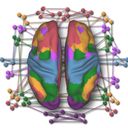
What matters most for childhood brain organization?
We analyzed 649 variables.
The answer: Socioeconomics (SES); with brain patterns pointing at sleep & stress as drivers.
Even brain-IQ associations were better explained by SES.
In Science today: www.science.org/doi/10.1126/...
Here's bonus slides on cross-validation tests, separate from our preprint. Covering:
1. paired (sign-flip) permutation test
2. label-swap permutation test
3. sample-level vs fold-averaged stats
4. a common misapplication of the corrected t-test
5. three bootstrap variants 1/N
What matters most for childhood brain organization?
We analyzed 649 variables.
The answer: Socioeconomics (SES); with brain patterns pointing at sleep & stress as drivers.
Even brain-IQ associations were better explained by SES.
In Science today: www.science.org/doi/10.1126/...
In a meta-analysis of 210 biomedical AI studies that statistically compared models under cross-validation, 97% used invalid statistical tests.
Here's our new preprint doi.org/10.64898/202... led by @tianchu.bsky.social @hetuli.bsky.social @shaoshiz.bsky.social @nichols.bsky.social 1/N
In a meta-analysis of 210 biomedical AI studies that statistically compared models under cross-validation, 97% used invalid statistical tests.
Here's our new preprint doi.org/10.64898/202... led by @tianchu.bsky.social @hetuli.bsky.social @shaoshiz.bsky.social @nichols.bsky.social 1/N
In a meta-analysis of 210 biomedical AI studies that statistically compared models under cross-validation, 97% used invalid statistical tests.
Here's our new preprint doi.org/10.64898/202... led by @tianchu.bsky.social @hetuli.bsky.social @shaoshiz.bsky.social @nichols.bsky.social 1/N