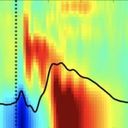
How does neural activity change with development? We assessed how “neural noise” changes with age, attention, and brain structure in 101 pediatric and adult neurosurgical patients.
Proud to have been a contributor to this project! Check it out: www.nature.com/articles/s41...
This study establishes how aperiodic activity, a ubiquitous signal linked to neural noise, develops in localized brain regions and illuminates the development of prefrontal control during adolescence in the development of attention and memory.
🚨 New preprint alert 🚨 Musical rhythms can boost brain stimulation effects! ⚡️ Sensory-entrained #TMS (seTMS) synchronizes TMS pulses with auditory rhythm-induced high-excitability brain states 🎶🧠
Thread below 👇 @stanfordmedicine.bsky.social #StanfordMed #StanfordBrain (1/10)
Charlie Kirk spent his life‘s work and all of his energy and time targeting out-groups while arguing for a world in which gun massacres would be easy to enact, plentiful, and inevitable, and he became famous and wealthy doing it, and we’re now not supposed to mention that because it’s not polite.
I’m very excited to share my FIRST first-author preprint - the result of my Northwestern graduate school lab rotation with Lisa Johnson!
We detected HFB in babies (1-4 months) noninvasively using scalp EEG, distinguishing wake from sleep states. 👶
Link: doi.org/10.1101/2025...
New paper that I helped with during my post-bacc at Northwestern!
Sparse, transient, internally generated brain states may drive successful episodic memory.
journals.plos.org/plosbiology/...