Postdoc at UC Irvine | Functional morphologist & evolutionary biologist | PhD from @GWBiology | NSF GRFP fellow | Full time ichthyologist 🐠 & part time herpetologist🦎| He/Him
jonathanhuie.com
Jonathan Huie, PhD
Loading...
There are more details in the paper that I couldn't talk about here! Check out open-access and free-to-read paper if you're interested. Reach out with questions!!!
doi.org/10.1242/jeb....
The finding that non-climbers can climb with enough motivation is key. It reveals how so many salamanders can climb without toepads or claws. We say that behavioral changes combined with mucus adhesion are enough to get up the wall, but subtle limb and foot traits can greatly enhance abilities.
I compared how 4 species of Aneides and Plethodon move on flat and vertical surfaces. Surprisingly, the non-climber that wasn't supposed to do well , did! All species climbed using the same techniques. Slower speed, smaller steps, bodies close to the wall. Yet climbing species still do better...
That is not to say no salamander is adapted for climbing. I previously showed that climbers in the genus Aneides have longer limbs, larger feet, and grippy toes. Do these traits actually improve climbing performance? Maybe changes in behavior helps with climbing?
bsky.app/profile/jmhu...
The climbing species of Aneides climbed faster than all other species. This supports that their long limbs and large feet enhance performance. Unique foot morphologies also seem to allow them to grasp the walls like arboreal lizards and frogs, in ways the other species couldn't
The takehome...
For context, many climbing animals have obvious adaptations like claws or toepads that help them grip. Salamanders have none of that, yet hundreds of different species are documented to climb vertically (some more than others). The wandering salamander climbs redwoods trees as high as 300 ft. HOW??
🚨 My last PhD chapter is out now in @jexpbiol.bsky.social 🚨 🦎
We compared the climbing abilities and kinematics of different species of salamanders. Surprisingly, all could climb well but climbing specialists do better. Let me tell why this is interesting (see thread)!
doi.org/10.1242/jeb....
🚨 My last PhD chapter is out now in @jexpbiol.bsky.social 🚨 🦎
We compared the climbing abilities and kinematics of different species of salamanders. Surprisingly, all could climb well but climbing specialists do better. Let me tell why this is interesting (see thread)!
doi.org/10.1242/jeb....
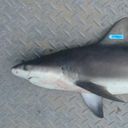
Basking sharks overlap with primary and secondary deep scattering layers during overwintering migration in the Northwest Atlantic Ocean 🦑🧪🐟🦈 journals.plos.org/plosone/arti...
I am recruiting PhD students for my new lab housed in the Sam Noble Museum at University of Oklahoma! If you are interested in fish macroevolution, geometric morphometrics, specimen-based research & phylogenomics please reach out. More info here: fishdiversitylab.weebly.com
Please share widely!!!
Summary: Comparison of the climbing kinematics of ecomorphologically distinct salamander species shows all climb well, underscoring the role of behavior in determining performance, but habitual climbe...
Long-distance migrations allow animals to exploit seasonal prey opportunities and track favorable oceanographic conditions. The basking shark (Cetorhinus maximus) is a large, filter-feeding elasmobran...
Excited to share the first paper from my PhD!
We looked at what traits help Aneides salamanders excel at climbing using museum specimens, CT scans, SEM, and more! No claws or toe pads, so how do they do it? In short, with long limbs, big feet and grippy toes! 🦎🧪
DM for PDF
doi.org/10.1098/rspb...